
Emerging Market Currencies Shift: Implications for Global Investors in 2025

The global financial order is shifting. While the US dollar still dominates as the world’s reserve currency, its grip is loosening — not with a bang, but with a steady, deliberate recalibration of power. For institutional investors, family offices, and HNWIs, understanding the evolving role of emerging market currencies is no longer optional. It’s essential for managing risk, seizing asymmetric opportunities, and preparing portfolios for a less dollar-centric world.
This isn’t a theoretical shift — it’s already playing out in trade settlements, reserve allocations, and capital flows. Geopolitical realignments, economic rebalancing, and digital payment systems are accelerating a multipolar currency regime. This post cuts through the noise and explores what’s driving the change, what it means for global asset allocation, and how to stay ahead of the curve.
The Shifting Sands of Global Currency Dominance
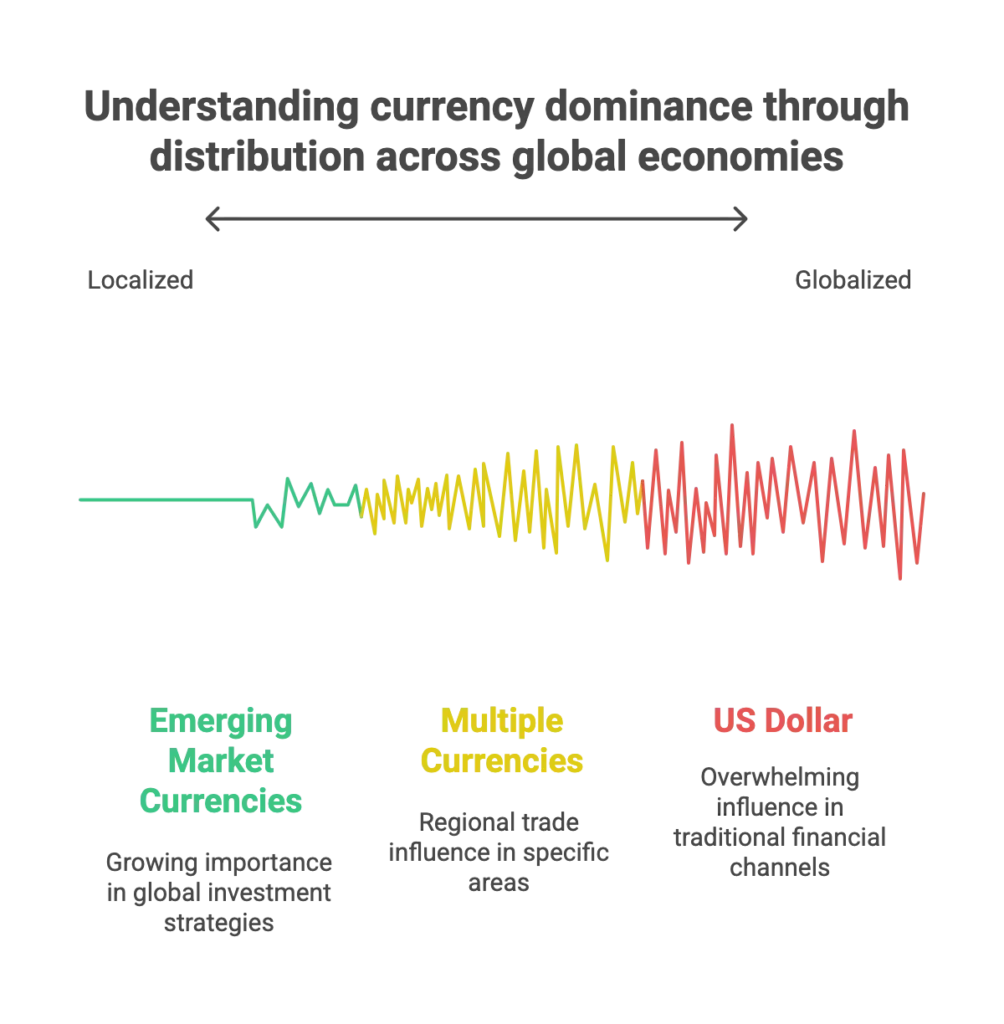
The notion of a single dominant reserve currency is a relatively modern phenomenon, solidified post-Bretton Woods. For much of history, multiple currencies held sway in different regions or for specific types of trade. The current shift can be seen, in part, as a return to a more distributed model, albeit driven by contemporary economic and political forces.
Several factors contribute to the gradual lessening of the US dollar’s overwhelming influence:
Geopolitical Diversification
Nations are increasingly seeking alternatives to the USD for trade settlement and reserve holdings, driven by concerns over sanctions risk and a desire for greater financial autonomy. This is particularly true among the BRICS nations and other large emerging market economies.
Rise of Alternative Payment Systems
The development of non-SWIFT payment systems and the exploration of Central Bank Digital Currencies (CBDCs) offer potential avenues for bypassing traditional USD-centric financial channels.
Relative Economic Shifts
While the US economy remains robust, the relative economic weight of emerging market nations, particularly in Asia, continues to grow. Their increasing share of global GDP growth and international trade naturally elevates the importance of their respective currencies.
This environment sets the stage for emerging market currencies to play a more significant role, moving from being primarily viewed through the lens of high-risk speculation to becoming integral components of sophisticated global investment strategies.
Unpacking the Ascent of Emerging Market Currencies
The strengthening narrative around certain emerging market currencies reflects a confluence of improving fundamentals and strategic policy decisions — key elements highlighted by recent fundamental analysis. Understanding these drivers is crucial for investors looking beyond the traditional major currencies
Economic Fundamentals Driving Currency Strength
At the heart of a strengthening emerging market currency lies robust economic performance. Countries exhibiting consistent economic growth, healthy export sectors, and improving balance of payments naturally see demand for their official currency increase. Foreign investors and trading partners need the local currency to invest in assets, purchase goods and services, or settle trade invoices.
For instance, nations with strong manufacturing bases or those benefiting from favorable commodity prices (if they are net exporters) often see their currencies appreciate. A positive trade balance, where exports exceed imports, creates a net inflow of foreign currency, which is then converted into the local emerging market currency, pushing its value up.
Monetary Policy and Interest Rate Differentials
Central banks in emerging market economies wield significant influence over their currency’s value through monetary policies. When fighting inflation or seeking to attract foreign capital, these central banks often raise interest rates. A higher interest rate differential compared to developed markets (like the US or Eurozone) makes holding assets denominated in the emerging market currency more attractive to global investors seeking yield. This capital inflow increases demand for the currency pair, leading to appreciation.
The Reserve Bank of India, for example, carefully manages its monetary policies, which directly impact the Indian Rupee. Similarly, the central banks of South Africa and Brazil influence the South African Rand and Brazilian Real respectively through their rate decisions.
The Growing Influence of Specific Emerging Market Currencies
While the term “emerging market currencies” covers a diverse group, some are particularly noteworthy in their increasing global prominence:

Chinese Renminbi (CNY/CNH)
Often referred to as the yuan, China’s official currency is perhaps the most significant challenger to the USD’s dominance. China’s massive economy, its role as the world’s factory, and its Belt and Road Initiative have dramatically increased renminbi usage in global trade. The offshore renminbi (CNH), traded in Hong Kong and Singapore, continues to gain liquidity and relevance.
Indian Rupee (INR)
India’s rapidly expanding economy, rising exports, and demographic tailwinds support a strengthening rupee. Though still subject to some capital controls, ongoing liberalisation and reforms are increasing its international role.
Brazilian Real (BRL)
Driven by commodity exports and domestic reforms, the Real plays a central role in Latin America. While subject to volatility, Brazil’s global export strength — particularly in agriculture — gives the BRL long-term weight.
South African Rand (ZAR)
Often a bellwether for African risk appetite, the Rand is deeply tied to commodity prices and serves as a proxy for broader emerging market trends in the region.
Other currencies like the Singapore Dollar (SGD), New Taiwan Dollar (TWD), and Malaysian Ringgit (MYR) also warrant attention due to their countries’ positioning in global tech and trade ecosystems. Each currency brings its own unique drivers and risk profile.
Implications for the Global Investor Portfolio
The rise of emerging market currencies presents both compelling opportunities and significant risks for global investors. Navigating this landscape requires a nuanced understanding that goes beyond simply viewing these as high-yield, high-volatility plays.
Opportunities: Diversification and Return Potential
Incorporating emerging market currencies into a portfolio offers real diversification. Their movements often differ from developed-market currencies, creating hedging opportunities. Meanwhile, higher local interest rates create carry trade potential — borrowing in low-interest currencies and investing in high-yielding emerging ones.
Beyond forex trading, investors can gain exposure through local currency bonds, equities, or structured notes. With careful selection, these instruments provide access to higher growth trajectories without direct reliance on USD-denominated assets.
Risks: Volatility, Liquidity, and Policy Uncertainty
However, these opportunities come with risks. Currency volatility, sudden capital controls, and political instability can impact returns. Liquidity in local markets may also be limited, and some central banks can intervene unpredictably.
Proper due diligence, diversification across multiple emerging markets, and dynamic hedging strategies are essential for mitigating these risks.
Conclusion: When the World Reprices Power, So Should You
De-dollarisation isn’t a theory — it’s a reality. BRICS+ nations are actively reducing their USD dependence, and central banks are already hedging their reserves. Whether the future belongs to the yuan, gold, or a new digital reserve unit, one thing is clear: global influence is being recalibrated in real time.
Investors and institutions that move early — by diversifying currency exposure, reassessing geopolitical risk, and securing flexible capital — will be best positioned to navigate this shift and seize its opportunities.
Is Your Portfolio Ready for a Post-Dollar World?
At Forbes Le Brock, we arrange strategic financing for family offices, asset managers and global investors who see what’s coming: a less dollar-centric world with new winners, new risks, and a need for agility.
We structure loans against global assets — from listed equities and fine art to real estate and aircraft — enabling clients to move decisively without forced liquidation or unfavourable currency timing.
If you’re rethinking your dollar exposure, we’re already one step ahead.
→ Contact us to explore discreet, asset based lending strategies tailored to your global outlook.
🎙️ Prefer an audio summary? Check out the Deep Dive discussion for deeper insights. 🎧 Listen now!
Frequently Asked Questions
1. What role do emerging market (EM) currencies play in the shifting global financial landscape?
Emerging market currencies, often referred to as EM currencies, are becoming increasingly important as global trade and capital flows diversify away from the US dollar. These currencies reflect the economic fundamentals and trade patterns of emerging markets, offering investors opportunities but also unique risks related to volatility and geopolitical factors.
2. How does the exchange rate of EM currencies impact trade emerging markets?
Exchange rates of EM currencies significantly affect trade emerging markets by influencing export competitiveness and the cost of imports. A stronger currency can make exports more expensive, while a weaker currency can boost trade volumes but increase import costs. Monitoring these exchange rates is crucial for investors and businesses involved in emerging markets.
3. What factors influence the trading of emerging market currencies in the forex market?
Trading emerging market currencies in the forex market is influenced by interest rate differentials, commodity prices such as the oil price, capital market flows, and geopolitical developments. For example, the official currency of Brazil is heavily influenced by commodity prices, which affects its exchange rate and attractiveness to traders.
4. Why is the Chinese Renminbi (official currency of the People’s Republic of China) often referred to as the ‘yuan’ in currency trading?
The terms ‘Renminbi’ and ‘yuan’ are often used interchangeably, but ‘Renminbi’ is the official currency name of the People’s Republic of China, while ‘yuan’ is the primary unit of account. The yuan (especially the offshore CNH market) plays an increasing role in global trade and finance, reflecting China’s growing influence in emerging markets.
5. How does the interest rate differential affect the appeal of EM currencies for investors?
Interest rate differentials between emerging markets and developed economies like the US impact capital flows into EM currencies. Higher interest rates in emerging markets can attract investors seeking better yields, affecting trading on margin and the demand for currency pairs involving EM currencies. This dynamic is key to understanding currency strength and risks.