
Portfolio Rebalancing Tool: SBL vs Specialist Software vs Selling
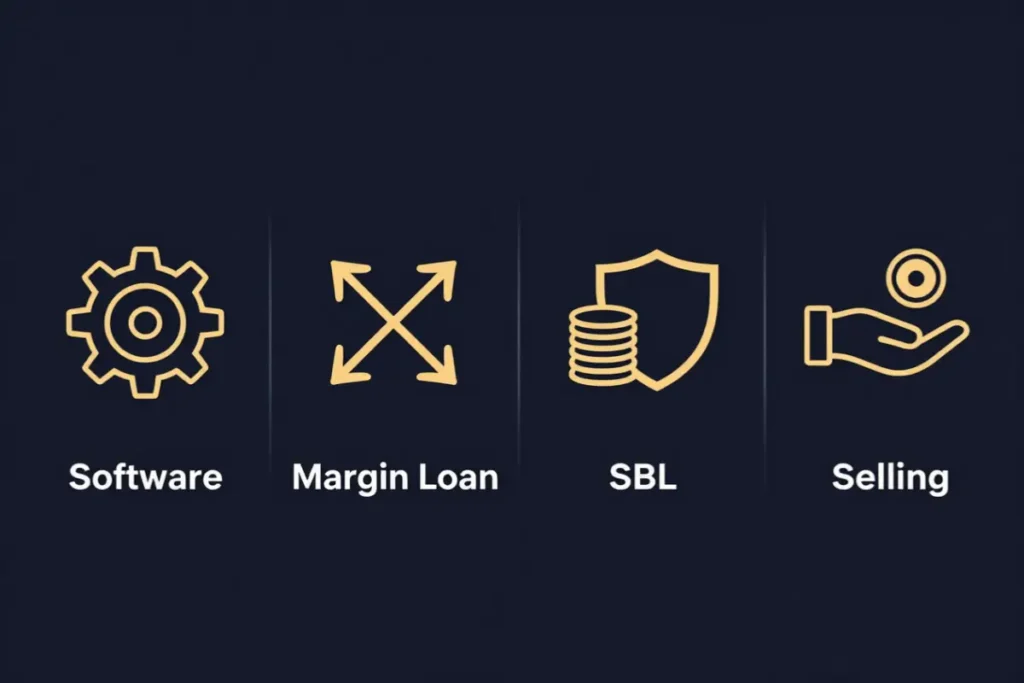
Most guides to choosing a portfolio rebalancing tool assume the underlying holdings are liquid and evenly spread. For a portfolio with a large, appreciated position in a handful of tech names, that assumption breaks down. Automated rebalancing software calculates the trade. It does not solve the tax bill or the concentration that made the trade necessary in the first place.
This is where securities-based lending (SBL) belongs in the conversation, not as a replacement for rebalancing tools but as a distinct category alongside them, suited to a specific problem: a single-stock or single-sector concentration too large to sell without consequence.
What Counts as a Portfolio Rebalancing Tool
The category spans four genuinely different mechanisms:
- Rebalancing software and robo-advisors: which monitor drift against a target allocation and generate or execute sell and buy trades automatically
- Margin loans: which extend short term, mark to market credit against a portfolio
- Selling and reallocating: the direct method, executed manually or by the software above
- Securities-based lending: which raises capital against the portfolio without disposing of the underlying position.
| Feature | Software | Margin Loan | SBL | Sell Stocks |
|---|---|---|---|---|
| Solves concentration risk | Only via selling | No | Yes | Yes |
| Requires a sale | Yes | No | No | Yes |
| Triggers capital gains | Yes | No | No | Yes |
| Suited to single stock | No | Limited | Yes | Yes |
| Ownership retained | No | Yes | Yes | No |
| Typical structure | Algorithmic, recurring | Callable, variable rate | Structured, term-based | One-off |
Where Software Falls Short for Concentrated Positions
Rebalancing software is built to correct drift across a diversified book, trimming overweight positions and topping up underweight ones on a schedule or a threshold. It works well when no single holding dominates the portfolio.
It is not designed for as a portfolio rebalancing tool where one position, or one sector, has grown to a size that selling it would move the market, crystallise a material tax liability, or reduce influence the holder wants to retain. In that scenario the software will still recommend the trade. It has no mechanism to raise liquidity without executing it. For a HNW holder with a concentrated tech position, that is the gap SBL is built to close.
Lender Insight: Structuring for Ongoing Use, Not a Single Event
Most content on SBL treats it as a single liquidity event: one facility, one drawdown, one purpose. Used as a portfolio rebalancing tool, the more relevant question is whether the facility supports repeated, ongoing use as the portfolio continues to drift.
Two structures matter here:
- Revolving facilities, which allow repeated draws and repayments against the same collateral pool as allocations shift over time, better suited to investors who expect to rebalance more than once
- Single-draw facilities, sized for a defined reallocation at a point in time, simpler to structure but requiring a fresh facility (and fresh underwriting) for the next rebalance
Lenders price and structure these differently. A revolving line typically carries tighter concentration limits per drawdown and more active monitoring, since the facility is expected to flex with the portfolio rather than settle into a fixed balance. This is a structuring decision worth raising with an intermediary before treating SBL as a recurring rebalancing tool rather than a one-off fix.
When Each Tool Fits
- Diversified portfolio, no single position dominates: rebalancing software is sufficient
- Concentrated position, seller is comfortable realising the gain: selling is the simplest route
- Concentrated position, seller wants to defer the tax event and retain upside: SBL
- Short-term liquidity need against a diversified, liquid book: a margin loan may be adequate, though it carries higher margin call risk than a structured SBL facility
- Concentrated position with an ongoing, multi-year rebalancing need: SBL structured as a revolving facility
This isn’t a case for treating SBL as a universal substitute for software or selling. It’s one tool in the set, and the right one specifically when concentration, not just drift, is the problem.
FAQs
1. Is rebalancing software suitable for a concentrated single-stock position?
Generally no. Rebalancing software corrects drift by trading, which means selling the overweight position. It doesn’t address the tax or market-impact consequences of doing so at scale.
2. Can SBL be used for recurring rebalancing, not just a one-off event?
Yes, if structured as a revolving facility rather than a single-draw loan. This needs to be agreed upfront, since it affects concentration limits and monitoring terms.
3. Does SBL replace the need for rebalancing software?
No. SBL addresses liquidity against a concentrated position. Software addresses ongoing drift monitoring and execution across the rest of the portfolio. Many HNW investors use both.
4. How does the cost of SBL compare to a rebalancing software subscription?
They aren’t directly comparable. Software fees are typically a small percentage of assets under management or a flat subscription. SBL cost is the interest rate on the facility, which only applies to the amount drawn. For a large single-stock position, the tax saved by not selling is usually the more material figure than either cost.
5. What size of concentration justifies considering SBL over simply selling?
There’s no fixed threshold. It depends on the size of the unrealised gain relative to the investor’s overall tax position, the liquidity of the stock, and how much the sale would move the price. This is a conversation worth having with an adviser before assuming either selling or borrowing is the default answer.
Conclusion
Choosing the right portfolio rebalancing tool comes down to what’s actually driving the rebalance. Software handles routine drift well. A margin loan covers short-term liquidity against a diversified book. Selling is the direct route when the tax cost is acceptable. SBL earns its place specifically when a single position has grown too large to sell cleanly, and the investor wants to defer that tax event while keeping the upside. None of these four is a universal answer, the right portfolio rebalancing tool is the one that matches the actual constraint, not the one that’s easiest to reach for first.
Take Action
If a concentrated position is the reason rebalancing software keeps recommending a sale you’d rather not make, we welcome a discreet conversation about whether a securities-based facility fits your situation.
We serve clients across the UK, Europe and Asia-Pacific.
For a more structured breakdown of other strategies that can be used as a portfolio rebalancing tool, see the Securities Based Lending playbook.